

First Aid & CPR for DSPs: OSHA 1910.151 and State Rules
First aid and CPR rules for DSPs combine a federal OSHA baseline with state rules on timing, renewal and hands-on skills. This guide covers OSHA 1910.151(b), the Ohio, Washington and Pennsylvania requirements, a comparison table, common mistakes and an agency file checklist.
First-Aid · CPR · OSHA · 1910.151 · DSP-training · Ohio · Washington · Pennsylvania
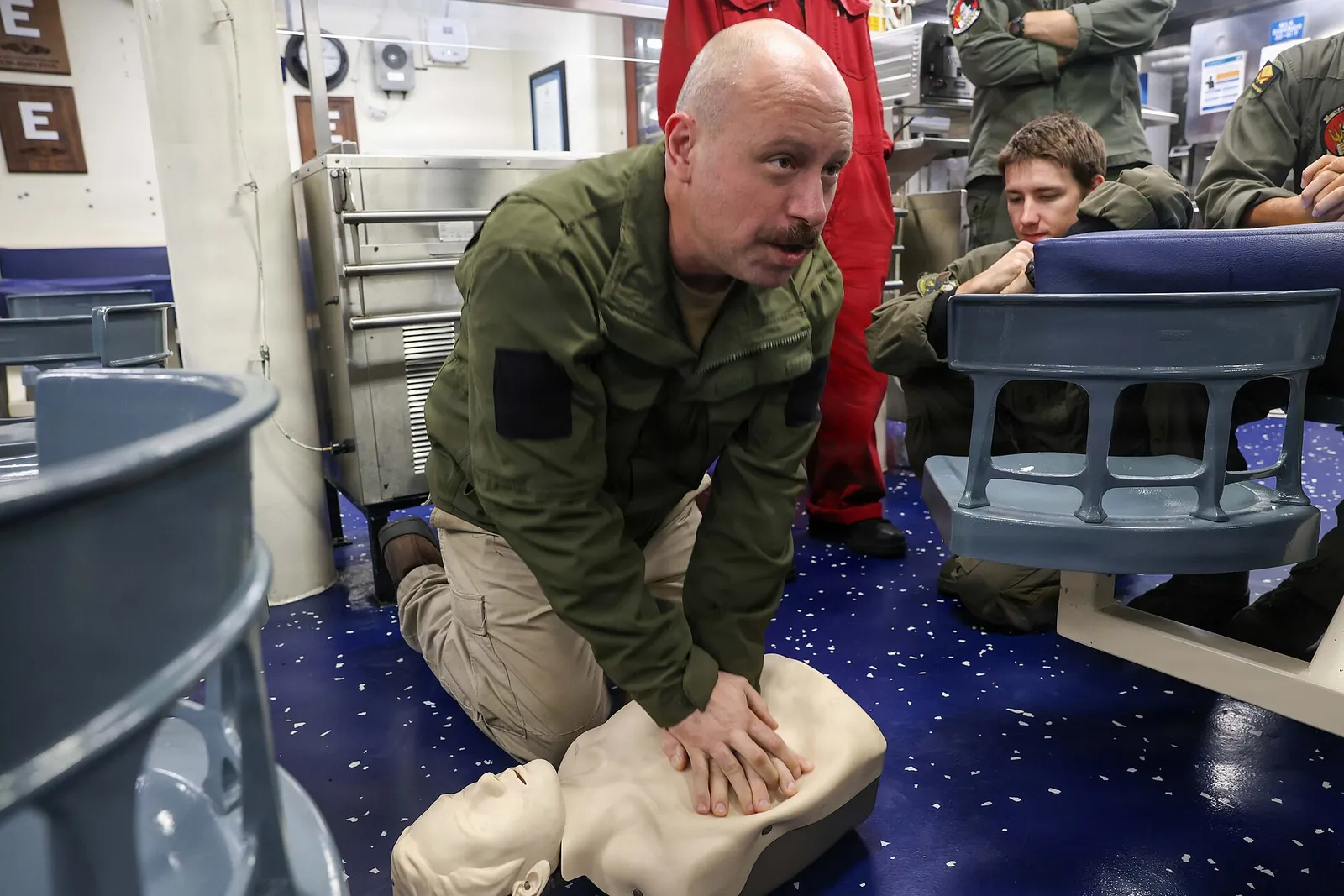
Training & eTracking Solutions · · 7 min read
Direct support professionals (DSPs) are often the first, and sometimes the only, trained adult in the room when someone chokes, falls, has a seizure or stops breathing. Yet first aid and CPR rules for DSPs are scattered. A federal workplace standard sets a baseline for employers, and each state adds its own rules on who must be certified, how soon, how often and whether the skills check must be hands-on. This guide explains the federal baseline, shows how Ohio, Washington and Pennsylvania handle it, and ends with a checklist agencies can use to keep certifications current.
The federal baseline: OSHA 1910.151(b)
The Occupational Safety and Health Administration (OSHA) standard on medical services and first aid, 29 CFR 1910.151, covers general industry employers, including private agencies that employ DSPs. Paragraph (b) reads: "In the absence of an infirmary, clinic, or hospital in near proximity to the workplace which is used for the treatment of all injured employees, a person or persons shall be adequately trained to render first aid. Adequate first aid supplies shall be readily available."
Three points from OSHA's own interpretation letters are worth knowing:
- Near proximity means minutes, not miles. In a February 5, 2007 letter, OSHA says it has long interpreted the term to mean emergency care must be available within no more than 3-4 minutes of the workplace. Where serious accidents such as falls, suffocation, electrocution or amputation are possible, emergency medical services must be that close if no employee on site is trained to give first aid.
- A longer time is allowed only in lower-risk settings. OSHA says that as a matter of enforcement discretion, up to 15 minutes may be reasonable in workplaces such as offices, where serious work-related injuries are more remote. A group home or day program should not assume that exception applies.
- Outside responders must be arranged in advance. An employer that plans to rely on EMS instead of a trained employee must take steps before any accident, such as making arrangements with the service provider, to confirm help will be prompt.
The standard says "first aid." It does not mention CPR by name. OSHA's letter adds that the standard does not prohibit employers from training employees in first aid, including CPR, even when they are not designated responders, and recommends that those employees be told the company's plan for workplace medical emergencies.
This federal rule protects employees. The rules that most affect DSPs, who support people with intellectual and developmental disabilities (I/DD), come from state developmental disability agencies and licensing rules, which are covered next.
How three states handle it
Ohio: certification with an in-person skills check
Ohio Administrative Code rule 5123-2-08 (provider certification for agency providers, effective September 29, 2024) requires an agency provider to make sure each DSP, except those exempted in Appendix B of the rule, holds and maintains:
- A valid "American Red Cross" or equivalent certification in first aid that included an in-person skills assessment completed with an approved trainer.
- A valid "American Red Cross" or equivalent certification in cardiopulmonary resuscitation that included an in-person skills assessment completed with an approved trainer.
The rule says "holds and maintains," so a lapse is a compliance gap the agency owns. The same paragraph requires DSPs to be at least 18, and separate paragraphs cover training in Appendix C and supervisory staff.
Washington: 60 days, kept current, and hands-on CPR
Washington's DDA training chapter, WAC 388-829, requires DSPs and ISS staff hired or contracted for DDA community residential settings on or after January 1, 2016 to complete, under WAC 388-829-0015:
- First aid training no more than 60 days after the date of hire, kept current.
- Cardiopulmonary resuscitation (CPR) no more than 60 days after the date of hire, kept current.
- Beginning February 1, 2024, CPR training that meets OSHA guidelines for hands-on skills development.
For staff hired before February 1, 2024 who held CPR certification without hands-on skills practice, the rule required training in line with OSHA guidelines by December 1, 2024, regardless of when the certification expired. Exempt community residential staff must also maintain current CPR and first aid certificates (WAC 388-829-0040).
Pennsylvania: licensed community homes under Chapter 6400
For licensed community homes for people with an intellectual disability or autism, 55 Pa. Code § 6400.46 sets out emergency training. Under it:
- Program specialists and direct service workers, and at least one person in a vehicle while individuals are being transported by the home, must be trained in first aid techniques before working with individuals.
- Program specialists, direct service workers and drivers of and aides in vehicles must be trained within 6 months after the day of initial employment, and annually thereafter, in first aid, Heimlich techniques and cardio-pulmonary resuscitation. The trainer must be an individual certified as a trainer by a hospital or other recognized health care organization.
The same section also covers fire safety training before working with individuals and annually by a fire safety expert. Pennsylvania's Chapter 6100 rules for home and community-based services have their own training sections, so confirm which chapter applies to each service location.
Comparison at a glance
| Question | OSHA 1910.151(b) | Ohio (OAC 5123-2-08) | Washington (WAC 388-829-0015) | Pennsylvania (55 Pa. Code 6400.46) |
|---|---|---|---|---|
| Who | Employers without nearby emergency care | Agency DSPs, unless exempt under Appendix B | DSPs and ISS staff in DDA community residential settings | Program specialists, direct service workers, drivers and aides in vehicles |
| First aid | Trained person or nearby care | Certification with in-person skills assessment | Within 60 days of hire, kept current | Before working with individuals, then first aid, Heimlich and CPR within 6 months |
| CPR | Not named | Certification with in-person skills assessment | Within 60 days of hire, hands-on skills since Feb. 1, 2024 | Within 6 months of hire |
| Renewal | Not specified | Hold and maintain | Kept current | Annually |
Common mistakes to avoid
- Treating an online-only course as certification. Ohio requires an in-person skills assessment, and Washington requires hands-on skills development for CPR. Check what your state accepts before assigning a course.
- Counting from the wrong date. Washington counts 60 days from hire; Pennsylvania counts 6 months from initial employment. Put the due date in your tracking system on day one.
- Letting renewals pile up. Ohio's rule uses "holds and maintains" and Pennsylvania's uses "annually," so expiration dates matter as much as completion dates.
- Forgetting drivers. Pennsylvania's rule names drivers of and aides in vehicles, not just direct service workers.
- Assuming the OSHA exception covers you. The 15-minute enforcement discretion described by OSHA is for workplaces where serious injuries are more remote.
A first aid and CPR file checklist for agencies
For each DSP:
- Date of hire or start date and the state's deadline calculated from it.
- Certificate or card for first aid and CPR with the issue date, expiration date and trainer or issuing organization.
- Proof of the in-person or hands-on skills assessment where your state requires one.
- A tickler for renewal well before the expiration date.
- For vehicle staff and drivers, evidence that they are covered where the rule names them.
- A written plan, shared with staff, explaining who responds to medical emergencies and how 911 is called, as OSHA recommends.
- Documentation of any exemption claimed and the rule it relies on.
How TES helps
First aid and CPR certification generally has to come from a trainer who meets your state's rule and often includes a hands-on skills check, so an online course cannot replace it. What Training & eTracking Solutions can do is help you build the knowledge around it and keep your records in one place. Our Pennsylvania DSP compliance training pathway tracks fire safety, first aid, CPR and the other trainer-based items as proof of completion, since those rules name a trainer, a certification or an hour count.
These catalog courses cover related general skills. They do not count as first aid or CPR certification and do not replace state requirements:
- Basic First Aid, a one-hour introduction to recognizing common emergency situations and providing appropriate care until professional help arrives
- Seizure Disorders, on how to respond if a person in your care has a seizure
- Emergency Preparedness, on what is expected during natural disasters and evacuations under a facility's Emergency Disaster Plan
- Fire Safety for Direct Support Professionals
- Infection Control: Universal Precautions and Basic Safety
- Incident and Critical Incident Reporting for Direct Support and Direct Care Staff
Our state requirement pages for Ohio, Washington and Pennsylvania can help you review files.
Training & eTracking Solutions is an NADSP Accredited Education provider whose courses count toward DSP-I and DSP-II. We have trained more than 200,000 professionals since 2010, and our catalog includes 400+ courses and programs. Because certification dates expire, read how to track employee training in a care agency. Related reading: OSHA bloodborne pathogens training requirements for care providers and ICF/IID emergency preparedness training requirements. If you support people in other states or programs, we can set up a pathway for your organization just in time. Contact us to get started.
This article summarizes OSHA 29 CFR 1910.151(b) and its interpretation letters, Ohio Administrative Code 5123-2-08, Washington Administrative Code 388-829 and 55 Pa. Code 6400.46 as published by those agencies. It is not legal advice. State rules differ, change often and may add requirements, so check the current text and confirm with your state agency or licensing office before making compliance decisions.
Related training
Common questions
- Does OSHA require CPR training for DSPs?
- Not by name. OSHA 1910.151(b) requires that someone be adequately trained to render first aid when no infirmary, clinic or hospital is in near proximity, which OSHA interprets as 3-4 minutes. OSHA's letter says employers may also train employees in CPR. State rules for DSPs often add specific CPR requirements.
- Do Ohio DSPs need hands-on first aid and CPR certification?
- Yes, unless exempt. OAC 5123-2-08(J)(2) requires valid first aid and CPR certifications, each including an in-person skills assessment completed with an approved trainer, for DSPs not exempted in Appendix B of the rule.
- How soon must Washington DSPs complete first aid and CPR?
- WAC 388-829-0015 requires first aid and CPR no more than 60 days after the date of hire, and both must be kept current. Since February 1, 2024, CPR training must meet OSHA guidelines for hands-on skills development.
- How often does Pennsylvania require first aid and CPR in licensed community homes?
- Under 55 Pa. Code 6400.46(d), program specialists, direct service workers and drivers of and aides in vehicles must be trained within 6 months of initial employment and annually thereafter in first aid, Heimlich techniques and CPR by a trainer certified by a hospital or other recognized health care organization.
Sources
- 29 CFR 1910.151: Medical services and first aid · Paragraph (b): trained first aid person where no infirmary, clinic or hospital is in near proximity
- OSHA letter of interpretation, February 5, 2007 (first aid training and 1910.151(b)) · Near proximity means 3-4 minutes, up to 15 minutes in lower-risk workplaces, arranging EMS in advance, CPR training not prohibited
- Ohio Administrative Code Rule 5123-2-08: Provider certification - agency providers · Paragraph (J)(2): first aid and CPR certification with in-person skills assessment, Appendix B exemptions
- WAC 388-829: Training requirements for DDA community residential DSPs · 388-829-0015 first aid and CPR within 60 days and hands-on CPR from Feb. 1, 2024; 388-829-0040 exempt staff
- 55 Pa. Code 6400.46: Emergency training · First aid before working with individuals; first aid, Heimlich and CPR within 6 months and annually